Technical Analysis: The Piaget Polo Date 36mm
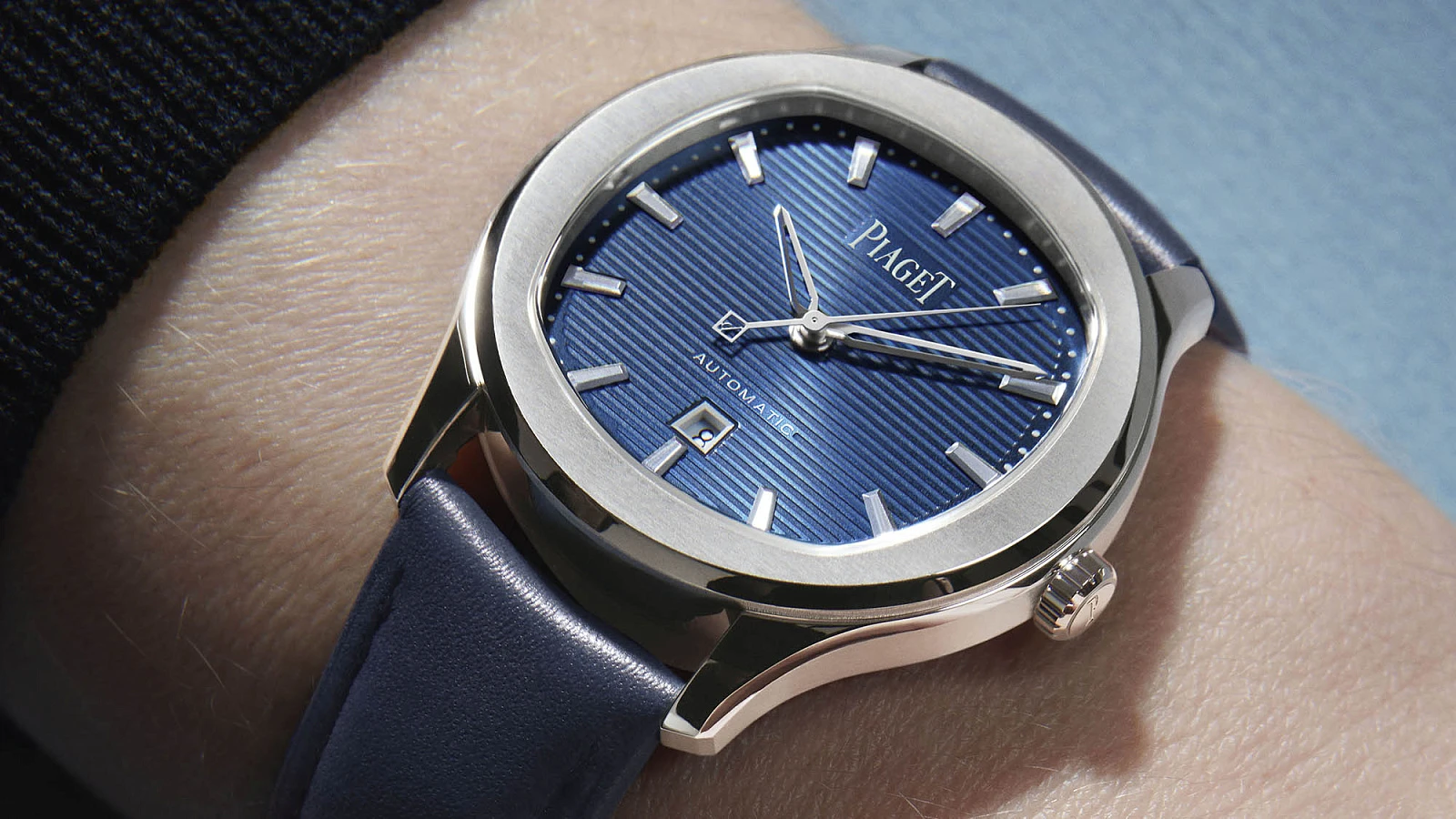
When Piaget reinterpreted its historic Polo lineage for contemporary audiences, it established a design vocabulary centered around geometric contrast and slim profiles. The Polo Date 36mm represents a refined execution within the collection, bringing mid-size proportions to the brand's signature luxury-sports aesthetic.
Position within the Polo Collection
The Piaget Polo collection occupies a distinct space in modern horology, bridging the gap between casual sports timepieces and formal dress watchmaking. While larger iterations of the modern Polo established the line's modern presence, the 36mm model addresses a growing preference among collectors for classic, balanced proportions. It offers a profile that sits comfortably on a broad range of wrist sizes without sacrificing the structural presence that defines the Polo aesthetic.
By executing the design in a 36mm dimension, Piaget highlights its historical expertise in ultra-thin watchmaking. The reduced diameter requires precise spatial management across the dial and within the case housing, ensuring that the visual balance between the round outer bezel and the internal cushion-shaped opening remains entirely coherent.
Lineage and Historical Context
The original Piaget Polo was introduced in 1979 by Yves Piaget. Designed to reflect the glamorous yet active lifestyle associated with the sport of polo, the original model featured an integrated case and bracelet crafted entirely from solid gold, characterized by alternating polished gadroons and brushed surfaces. It became an emblematic design of late twentieth-century watchmaking, symbolizing fluid integration between case and band.
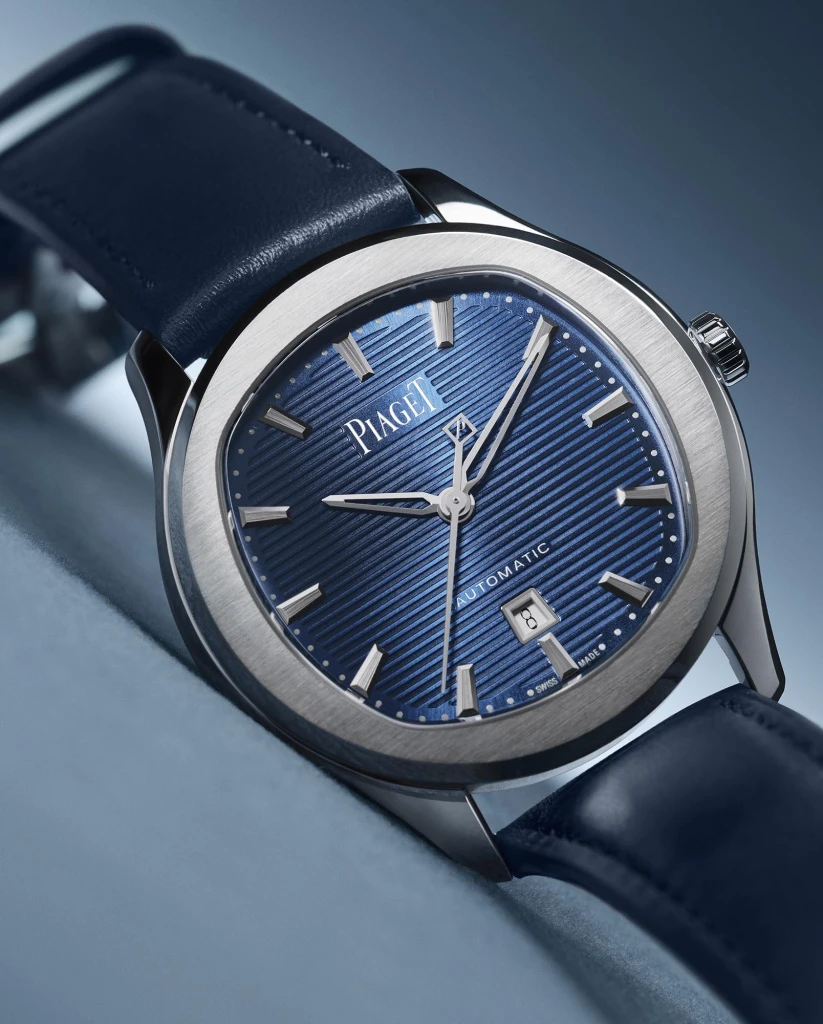
In 2016, Piaget evolved the collection into its current iteration, adopting a shape-within-a-shape construction that pairs a round bezel with a cushion-shaped dial opening. The 36mm version continues this evolution, preserving the foundational design codes established during the collection's revival while tailoring them to a more traditional case silhouette.
Case Architecture and Dial Finishing
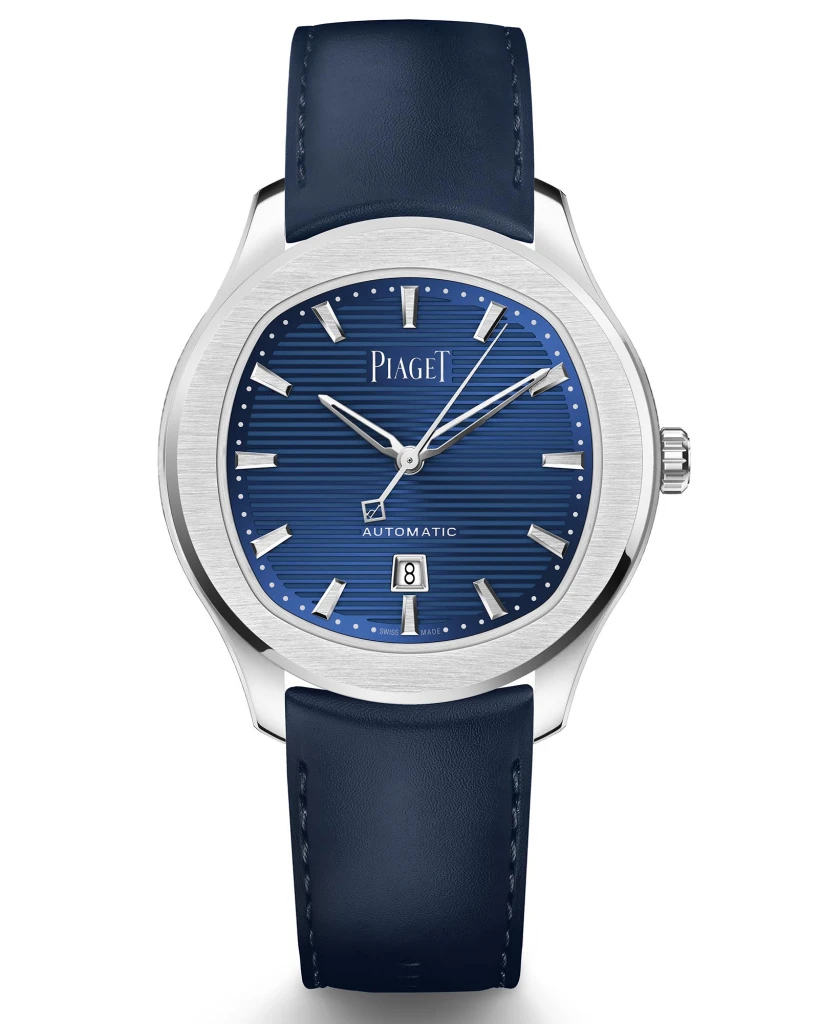
The exterior of the reference is defined by a multi-layered case construction crafted in 18k white gold. The bezel features vertical satin-brushing across its upper plane, contrasted by polished bevels along the outer edge. This interplay of surface treatments creates depth, catching light at varying angles without relying on aggressive angularity. The slim mid-case transitions into short, curved lugs that pull the strap close to the wrist.
The dial is finished in deep blue with a horizontal guilloché motif, a hallmark of the modern Polo collection. Applied trapezoidal hour markers filled with luminescent material provide legibility against the textured background. The rhodium-plated hour and minute hands are skeletonized, while the central seconds hand features a counterweight shaped like the Piaget 'P' emblem. A bevelled date aperture is positioned at 6 o'clock, maintaining horizontal symmetry across the vertical axis.
Internal Architecture: Calibre 500P1
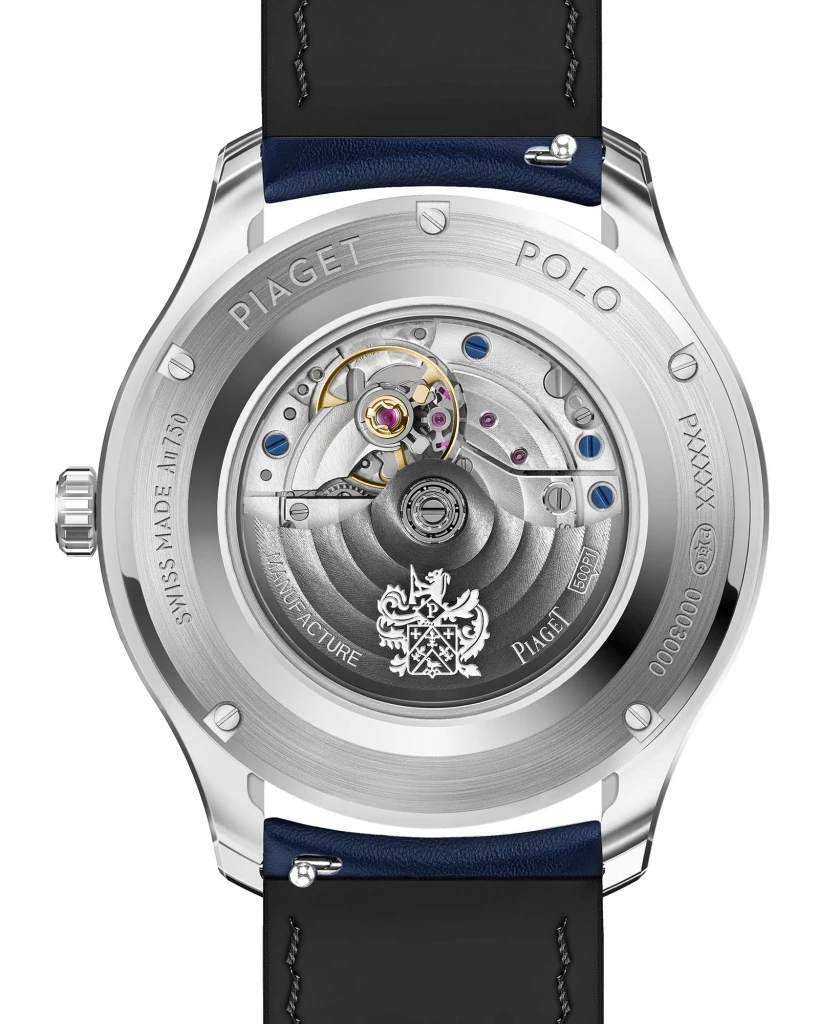
Beating within the case is the manufacture calibre 500P1, an ultra-thin self-winding mechanical movement developed specifically to fit Piaget's reduced case dimensions. Operating at a frequency of 28,800 vibrations per hour (4 Hz), this movement delivers a power reserve of approximately 40 hours while maintaining a remarkably slim height.
Visible through the sapphire crystal display back, calibre 500P1 exhibits refined haute horlogerie decorations. The bridges feature circular Côtes de Genève, blued steel screws, and bevelled edges. The slate-grey oscillating weight is engraved with the Piaget coat of arms, highlighting the manufacture's long-standing tradition of internal component decoration and mechanical miniaturization.
Ergonomics and Wrist Experience
On the wrist, the 36mm case diameter combines with a slim profile to deliver an unobtrusive, balanced fit. The short lug-to-lug distance allows the watch to hug the contour of the wrist, fitting easily beneath a shirt cuff. The combination of satin-brushed and polished surfaces on the 18k white gold case gives the watch a substantial feel despite its compact dimensions.
The timepiece is paired with a matte dark blue alligator leather strap fitted with an 18k white gold folding clasp. An integrated quick-change mechanism allows the wearer to swap straps without the use of specialized tools, adding practical versatility to a mechanical watch designed for daily wear.
Target Audience and Editorial Assessment
The Piaget Polo Date 36mm is crafted for discerning collectors who appreciate classical sizing, understated finishing, and genuine ultra-thin manufacture movements. It appeals equally to men seeking traditional proportions and women looking for a mechanically sophisticated alternative to gem-set quartz options.
By prioritizing architectural harmony over sheer wrist presence, Piaget has delivered a thoughtful interpretation of the luxury sports concept. The Polo Date 36mm stands as a testament to the brand's ability to compress high-level movement manufacturing into elegant, daily-wear proportions.
Piaget watches at WATCH LAB — pieces in stock and on order in our Dubai boutique.